The Overhand Knot
止結, 止结, 止め結び, 옭매듭
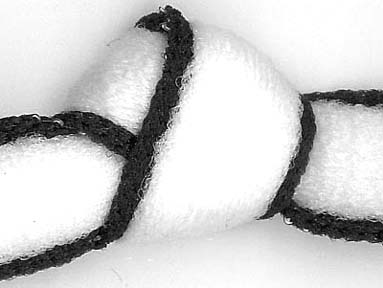 Generalities
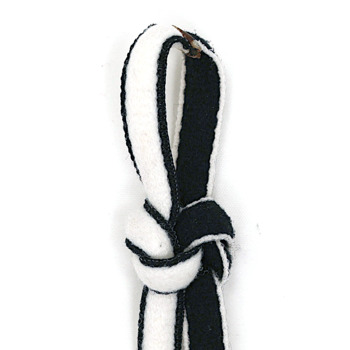
The Overhand Knot is the knot that most everyone thinks of when you say "Tie a knot." Very simple and yet also decorative if done with the right materials or in the right combination.
Nomenclature
The single overhand knot is also known as the simple knot, the thumb knot, the half knot and much less commonly as the underhand knot.
The double overhand is sometimes called the blood knot, the barrel knot, or the grinner knot. The triple overhand is also called the Franciscan knot, after an order of Italian friars who would tie multiple overhand knots on the ends of their rope belts.
A multiple overhand knot is also often simply called a long knot. In addition to being decorative, the long knot serves as the unit knot in the ancient Incan khipu or quipu record keeping system.
Sources
- Wikipedia: 反手結 (MT: backhand results)
- Wikipedia: 止め結び (trans: stop knot)
- Korean National Rescue Service instructional video: 엄지 매듭 (MT: thumb knot)
Translation Notes
You may notice that my "official" translation, 止結, is not the same as my venerably sourced (Wikipedia) translation, 反手結 (fǎnshǒu jié). "反" means "turn over", "counter", or "reverse". "手" means "hand". And that, of course, means that someone translated "overhand" for "反手結". On the other hand, "止結" machine translates to "fixed knot". Checking some dictionaries, "止" mostly means "to stop". So, does that mean that it is "the stopper knot"? Is "止" also translated from English?? I don't know and there is only so far I can dig with my resources and language skills, so at this point I'm assuming that "止結" is the "real" Chinese name.
Note, also, that the sourced and "official" Japanese translation, 止め結び, is very similar to the Chinese. Of course, multiple names for the same thing is not a problem unique to English. Also, my current "official" translation set are all sourced from books vs the internet, so I have more faith in those. Someday I will redo my research to remember which books are the respective sources and link in the exact bibliographic information.
How To
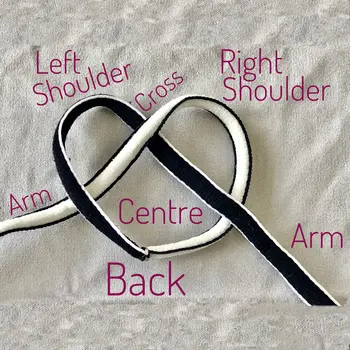
Breaking down the overhand into component parts.
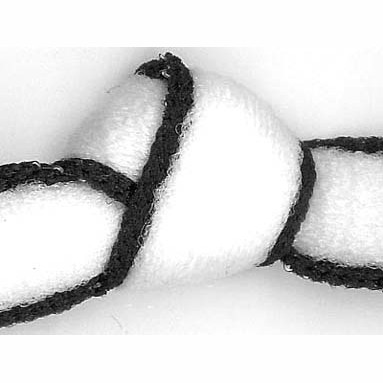
止結
止结
止め結び
옭매듭
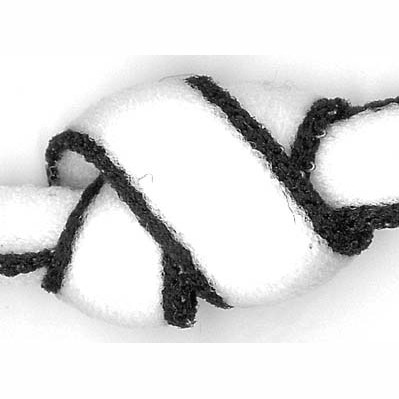
固止結
固止结
固め止め結び
겹옭매듭
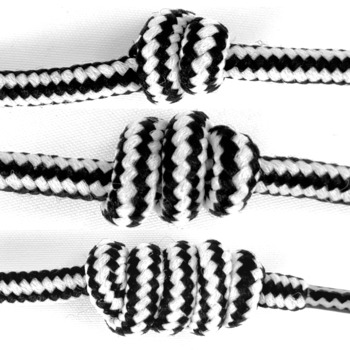
多重止結
多重止结
多重止め結び
다중 옭매듭
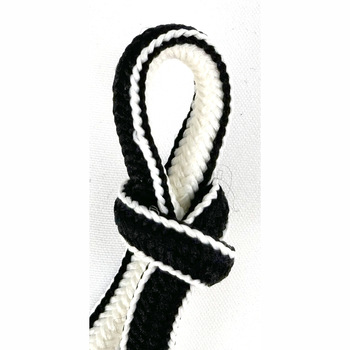
活結
活结
引き解け結び
풀 매듭
Similar Knots or Variations
Many knots, decorative or otherwise, are based on the OH knot. Some are modifications of the multiple OH:
- 抛索結 (Heaving line knot, 抛 cast, 索結 hitch, 抛 throw 索 rope)
- Simple or Common Whipping
When two OH or half knots form a functional or cohesive unit they are often considered a single knot:
- Reef Knot/Square Knot
- Surgeon's Knot
- Fisherman's Bend
- Water Knot
Some sennits are composed of OH or half knots tied in series:
- solomon's bar
- west country whipping
There are a surprising number of ways that two OH knots can be interlocked. The "True Lovers' Knot" is said to be two interlocking OH knots, but there is no consensus as to which particular configuration can claim the title. I'm pulling for the Sauvastika Knot.
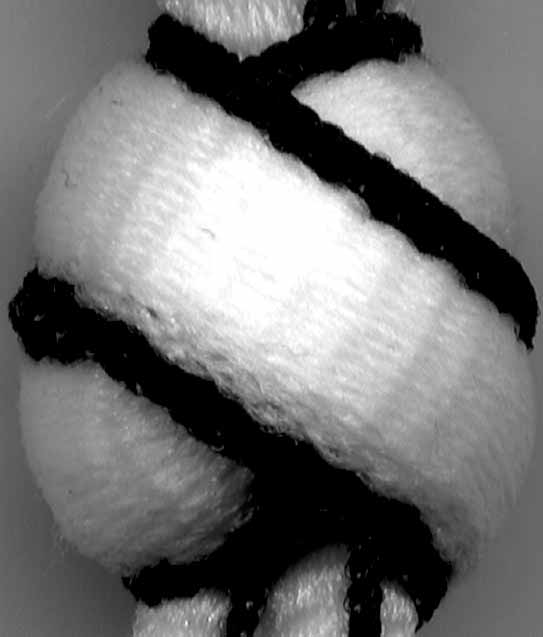
雙聯結/双联结
双聯結び
도래매듭 ㄕㄨㄤ ㄌㄧㄢˊ ㄐㄧㄝˊ/shuāng lián jié
そう れん むす/sō ren musubi
dorae maedeup
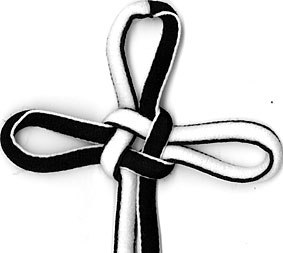
卍字結/万字结
総角結び
잠자리매듭 ㄨㄢˋ ㄗˋ ㄐㄧㄝˊ/wàn zì jié
あげまき むす/agemaki musubi
jamjari maedeup
同心結/同心结
tóng xīn jié
No web page here, yet, but I did make an Instructable for the Mandala Knot of which the Sympatico is the single version.
Of course, more than two knots can be interlocked...
- Stacked Overhand Nest
- 馬太華爾卡結 (Matthew walker knot)